High Availability Architectures: Mirror, Farm, and Advanced Software Clustering
What are the different high availability architectures and the different software clusters with SafeKit?
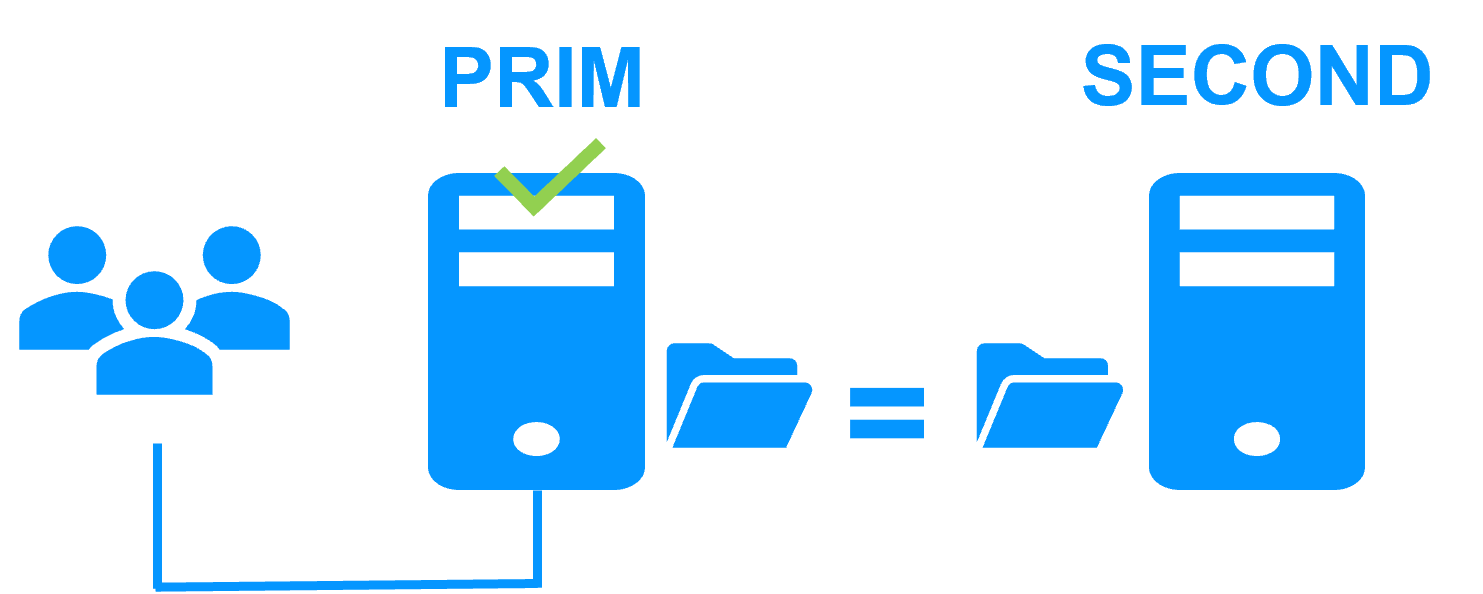
Mirror cluster
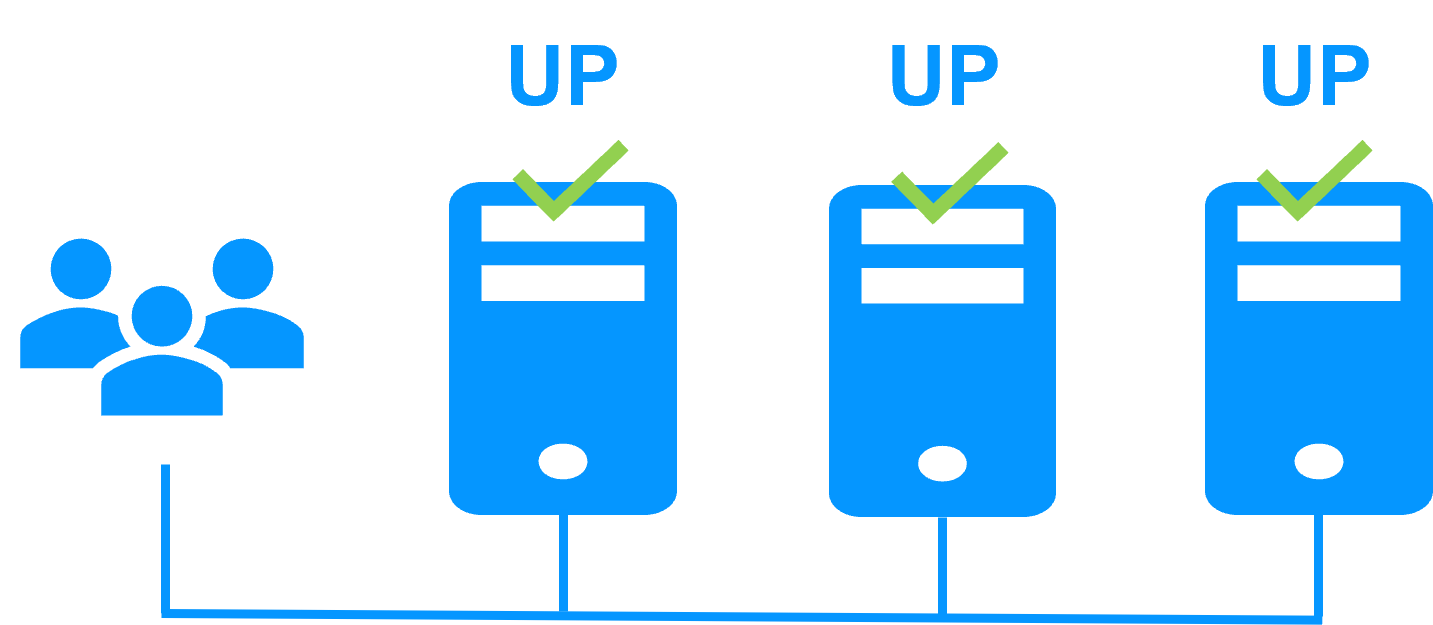
Farm cluster
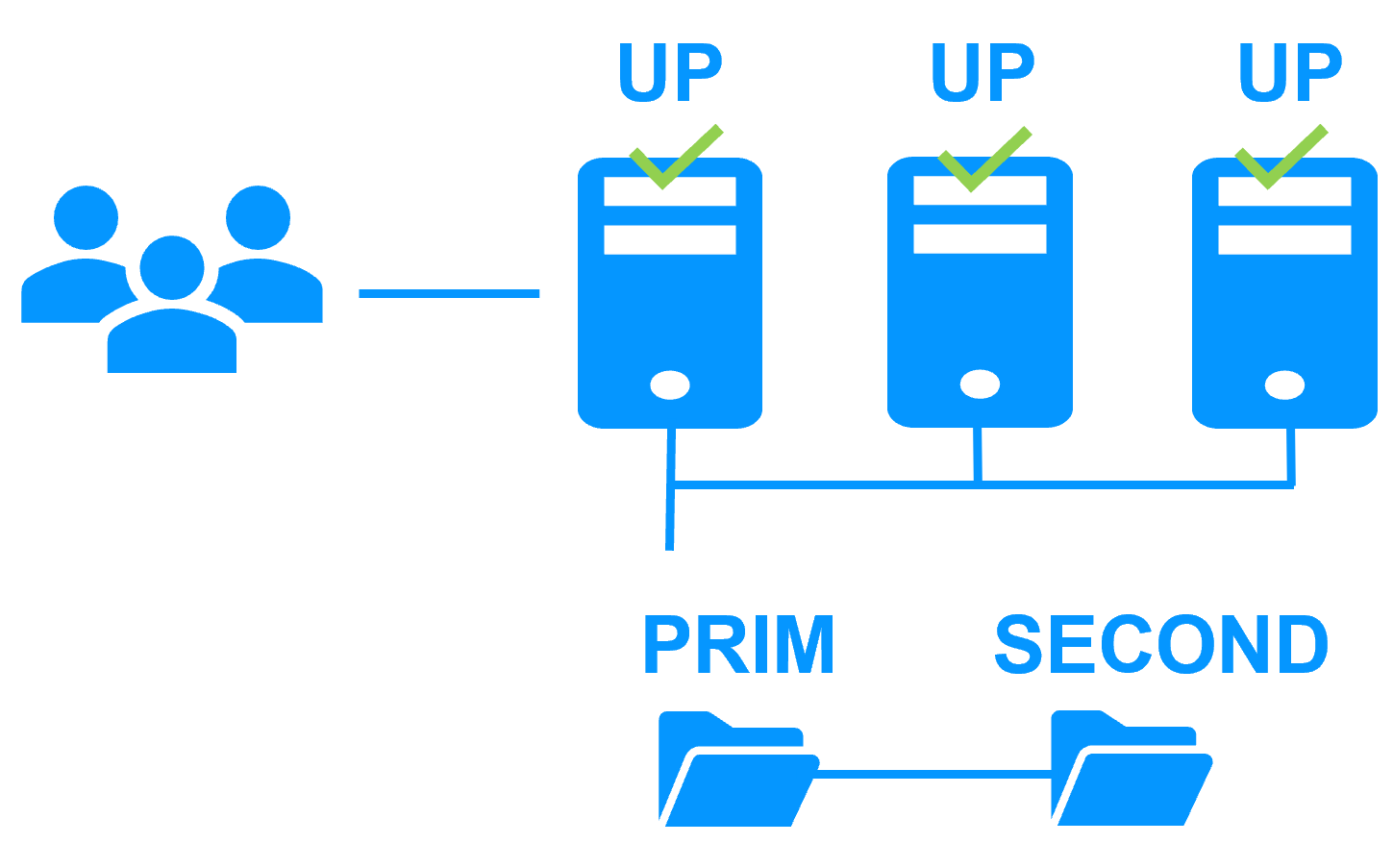
Farm+mirror cluster
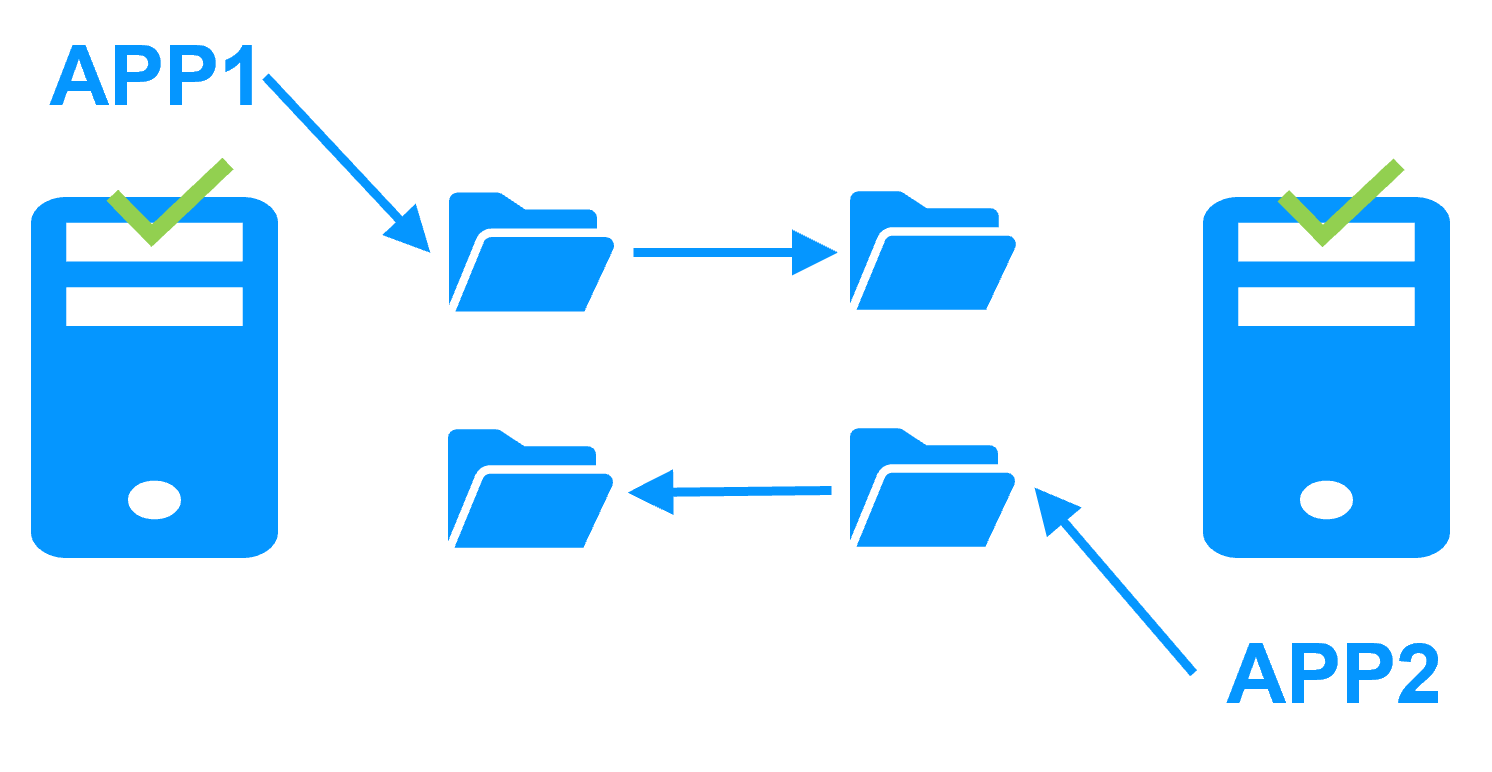
Active/active cluster
N-1 cluster
How to build high availability clusters with SafeKit?
Use high availability modules
A high availability module is a customization of SafeKit for an application. There are two types of modules: the mirror module with real-time data replication and failover and the farm module with load balancing and failover.
If you deploy a mirror module on 2 servers, then you create a mirror cluster and if you deploy a farm module on N servers, then you create a farm cluster.
Several application modules can be deployed on the same servers. Thus, advanced clustering architectures can be implemented like those presented previously (farm+mirror, active/active, N-1).
What is an application module?
In practice, an application module is a “.Safe” file (zip type) including:
1 - the configuration file userconfig.xml which contains:
- names or physical IP addresses of the servers,
- name or virtual IP address of the cluster,
- file directories to replicate in real time (for a mirror module),
- network load balancing criteria (for a farm module),
- configuration of software and hardware failures detectors
2 - the scripts to start and stop the application.
Plug and play deployment of high availability modules
Once an application module is configured and tested with an application, deployment requires no specific IT skills:
- install application on 2 standard servers (physical or virtual),
- install the SafeKit software on both servers,
- install the application module on both servers.
🔍 SafeKit High Availability Navigation Hub
Explore SafeKit: Features, technical videos, documentation, and free trial
| Resource Type | Description | Direct Link |
|---|---|---|
| Key Features | Why Choose SafeKit for Simple and Cost-Effective High Availability? | See Why Choose SafeKit for High Availability |
| Use Cases | Explore How SafeKit Ensures the High Availability of Critical Infrastructure | See All Use Cases (OEM Software, Edge Servers, SCADA, and more) |
| Deployment Model | All-in-One SANless HA: Shared-Nothing Software Clustering | See SafeKit All-in-One SANless HA |
| HA Strategies | SafeKit: Infrastructure (VM) vs. Application-Level High Availability | See SafeKit HA & Redundancy: VM vs. Application Level |
| Technical Specifications | Technical Limitations for SafeKit Clustering | See SafeKit High Availability Limitations |
| Proof of Concept | SafeKit: High Availability Configuration & Failover Demos | See SafeKit Failover Tutorials |
| Architecture | How the SafeKit Mirror Cluster works (Real-Time Replication & Failover) | See SafeKit Mirror Cluster: Real-Time Replication & Failover |
| Architecture | How the SafeKit Farm Cluster works (Network Load Balancing & Failover) | See SafeKit Farm Cluster: Network Load Balancing & Failover |
| Competitive Advantages | Comparison: SafeKit vs. Traditional High Availability (HA) Clusters | See SafeKit vs. Traditional HA Cluster Comparison |
| Technical Resources | SafeKit High Availability: Documentation, Downloads & Trial | See SafeKit HA Free Trial & Technical Documentation |
| Pre-configured Solutions | SafeKit Application Module Library: Ready-to-Use HA Solutions | See SafeKit High Availability Application Modules |